FANUC vs Syntec
FANUC or Syntec on a VMC: how the choice is actually made
Both controllers are offered on the same machine, and the price difference is real but rarely the deciding factor. What decides it is who programs the machine, who fixes it when it stops, and how long the shop intends to keep it.
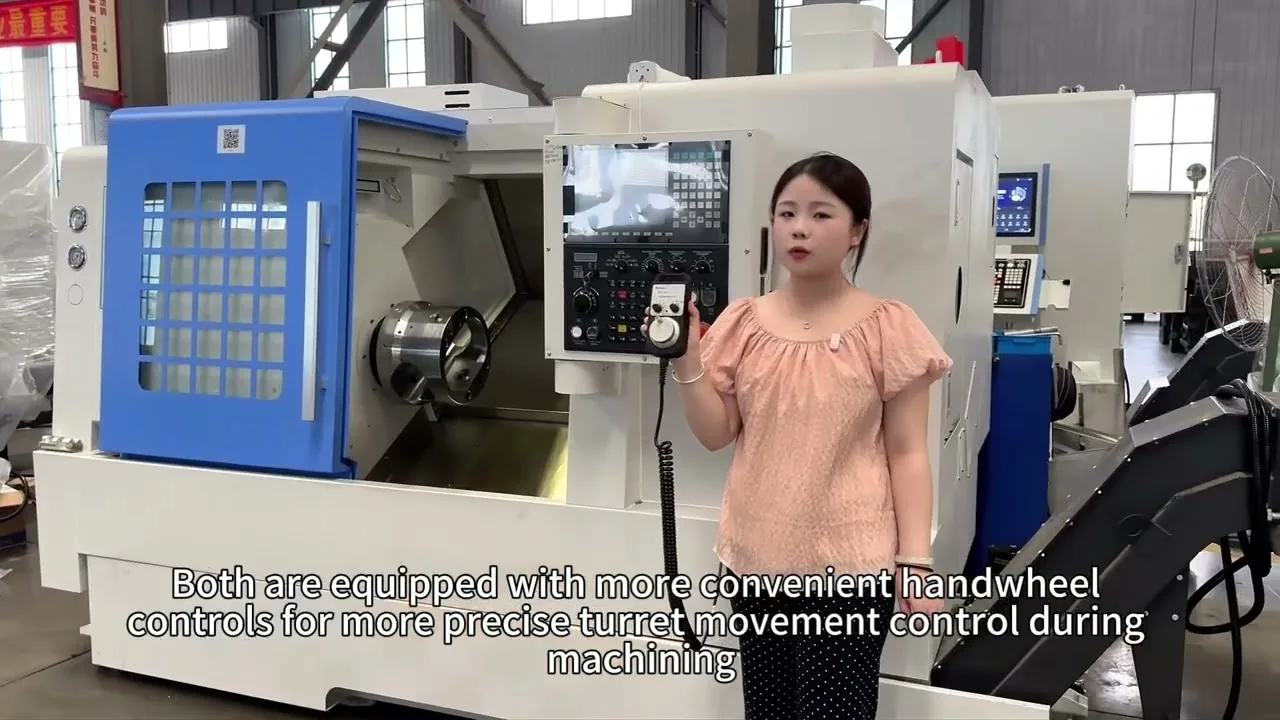
Video: One Powerful Machine – Two System Choices: FANUC or Syntec. Which One Fits You?#FANUCvsSYNTEC · Nicole Wang
The programming question comes first
If the shop already runs FANUC, every operator and every post-processor is already tuned to it. Switching controllers to save money on the machine costs more in retraining and in the first month of scrapped parts than the controller saves — and the cost lands in production, where it is harder to attribute.
Syntec is the opposite case: a shop buying its first VMC, or one where programming happens at the machine by an operator who prefers a PC-style interface, gets to a productive program faster on Syntec than on a FANUC they have never touched.
The honest test is to ask who will write the first program and how they will do it. If the answer is "our CAM department posts to FANUC", the decision is already made. If the answer is "the operator at the machine", the interface matters more than the brand.
Support and spares in your market
This is the part buyers underweight. A controller is only as good as the nearest person who can diagnose it. Ask two questions before deciding: who services this controller within a day of my shop, and how long does a replacement board take to arrive.
In markets where FANUC has a dense service network, FANUC wins on downtime alone. Where that network is thin, a Syntec machine with local support beats a FANUC machine with a two-week parts lead time — every time, regardless of which controller is technically better.
Get the answer in writing, with a name and a phone number, before the order. A supplier who cannot name a service contact is telling you something useful about the next five years.
What does not change between them
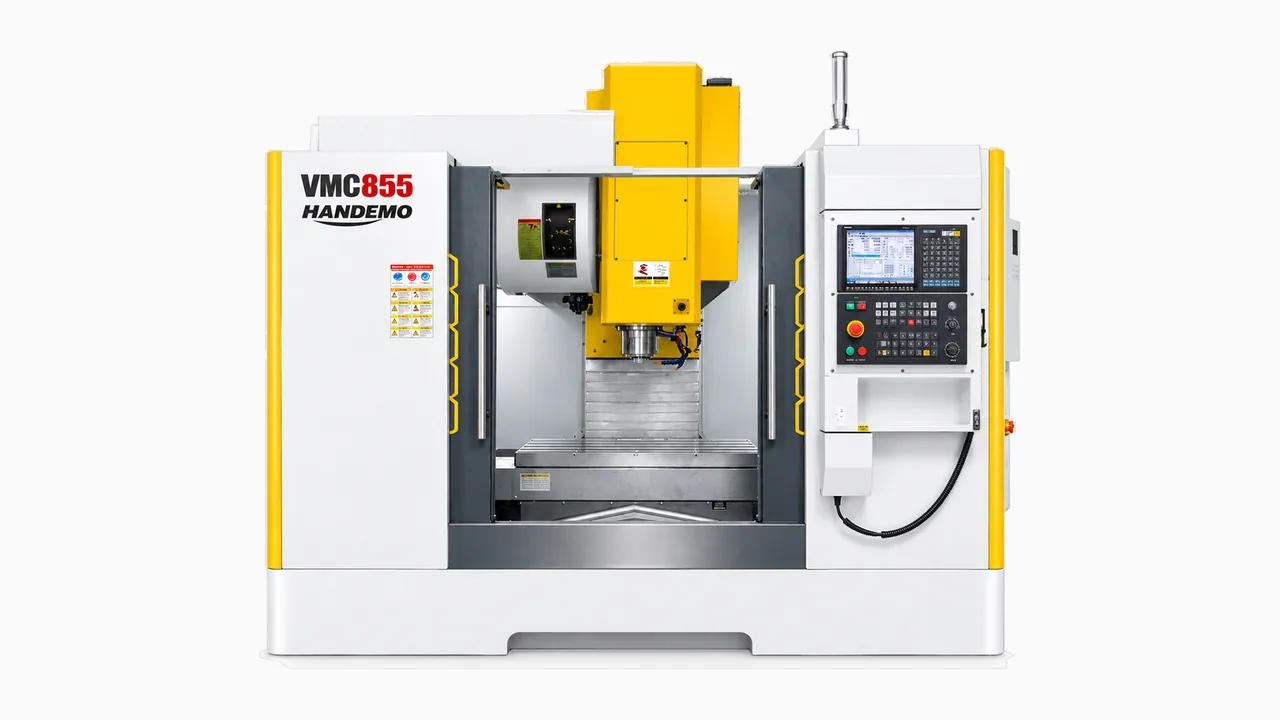
The mechanical platform is identical. Envelope, table, spindle taper, magazine and accuracy are the same whichever controller is fitted — a VMC855 with Syntec has the same 800 × 550 × 550 mm travel and the same 0.008 mm positioning accuracy as one with FANUC.
That means the controller decision is reversible in a way the platform decision is not. Get the envelope right first, then choose the controller for the people who will run and repair it. Reversing a wrong controller choice costs a retrofit; reversing a wrong envelope choice costs a new machine.
It also means controller choice should never be used to justify a machine that is too small. A better controller does not add travel.
What to put in the quotation
Specify the controller model, not just the brand. Ask for the list of options included — memory size, number of controlled axes, macro support, Ethernet or USB transfer — because the same brand name covers a wide range of capability, and two quotes that both say "FANUC" can differ substantially.
Also get in writing which controller documentation ships in English, and whether the post-processor for your CAM system is supplied or has to be written locally. A machine that arrives with unreadable documentation and no post-processor is not productive on day one.
Finally, confirm the warranty terms for the controller separately from the machine. They are often handled by different parties, and the boundary between them is where disputes start.
A note on what buyers actually regret
In practice the regret is rarely "we should have bought the other controller". It is "we bought a controller nobody locally could fix" or "we assumed the post was included". Both are procurement failures, not technical ones.
The controller is the part of the machine a shop interacts with every day, which makes it feel like the most important decision. Structurally it is the least consequential — the castings, the geometry and the envelope determine what the machine can make. The controller determines how pleasant that is.
Choose the controller for the person who will fix it at 2 a.m., not for the person who signs the purchase order.
Key points
- Machine envelope, spindle and accuracy are identical whichever controller is fitted
- Existing FANUC shops should stay on FANUC for programming continuity
- Local service depth matters more than the brand name in thin-support markets
- Specify the controller model and options list, not just the brand